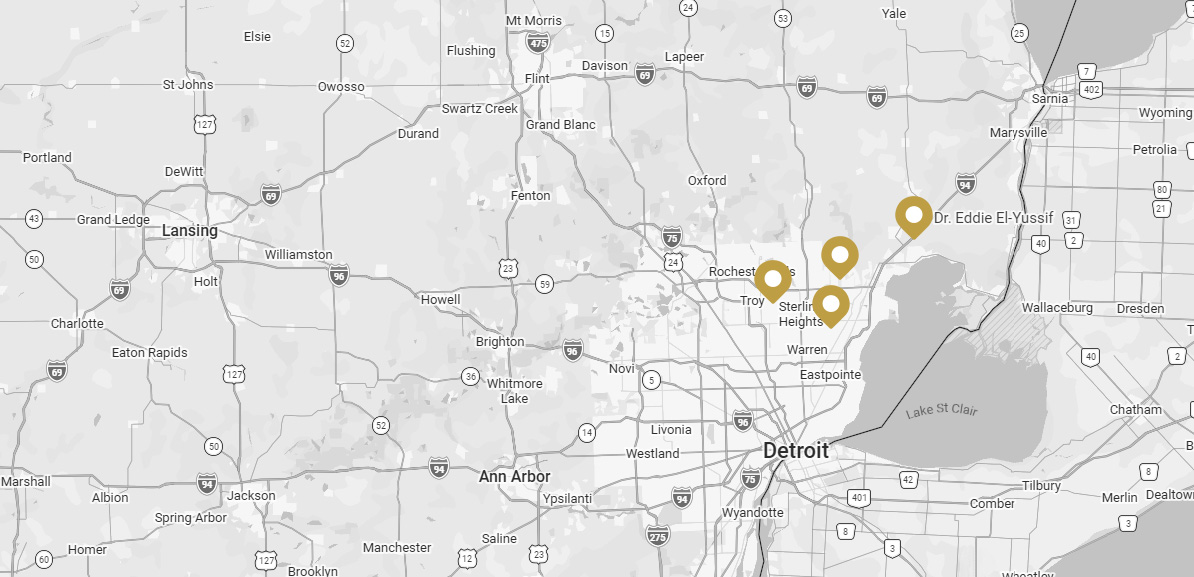
Non-Surgical Knee Treatments in Clinton Township, MI
Living with chronic knee pain can make even the simplest daily activities difficult. Whether you're walking, climbing stairs, exercising, or spending time with family, persistent knee discomfort can significantly affect your quality of life. At Elyussif Orthopedic & Knee Pain Center in Clinton Township, MI, patients have access to advanced non-surgical knee treatments designed to relieve pain, improve mobility, and help delay or avoid surgery whenever possible.
Dr. Eddie El-Yussif specializes in diagnosing and treating a wide range of knee conditions, including osteoarthritis, cartilage injuries, tendon disorders, ligament injuries, and chronic knee pain. Using a personalized approach, he develops treatment plans tailored to each patient's condition, lifestyle, and goals. Treatment options may include regenerative medicine, hyaluronic acid injections, physical therapy, laser therapy, bracing, and other evidence-based therapies that help patients return to the activities they enjoy.
Early treatment can often prevent symptoms from worsening and help preserve joint function. Patients throughout Clinton Township, Lenox, Macomb County, and surrounding Michigan communities trust Elyussif Orthopedic & Knee Pain Center for comprehensive, patient-centered knee care focused on long-term results.
What are Nonsurgical Knee Treatments?
The knee is a complex joint that consists of bone, cartilage, ligaments, and tendons that make joint movements easy and at the same time it is more susceptible to various kinds of injuries. Knee problems may arise if any of these structures get injured by overuse or suddenly during sports activities. Injuries to the knee can be caused by degenerative diseases such as arthritis, traumatic injuries, and sports injuries. These conditions may affect the bones & joints and impair the mobility as well as the quality of life of the patients. All these conditions require appropriate treatment, may be surgical or non-surgical to restore to normal activities. The non-operative orthopedic treatment options include non-pharmacological and pharmacological interventions. They are aimed at providing symptomatic relief and improving the quality of life of the patients. They can be used as a treatment option to treat certain conditions or to decrease pain as well as promoting functioning and quality of life after the surgical treatment.
Nonpharmacological Intervention
Nonpharmacological interventions may range from simple lifestyle modification or physical exercises and rehabilitation programs. Some of the non-pharmacological interventions include:
Weight reduction and physical exercise - The lifestyle changes resulting in weight loss in obese individuals and doing appropriate physical exercises play an important role in the prevention and management of knee conditions. The optimal weight (BMI) should be 18.5 to 25. BMI of 25-29 is considered overweight and BMI over 30 is considered obese. Exercises are contraindicated in individuals suffering from cardiovascular diseases. Therefore, rigorous exercises are not ideal for all patients and must be individualized for every patient and done under the supervision of a trained professional.
Transcutaneous Electrical Nerve Stimulation
The transcutaneous electrical nerve stimulation (TENS) method involves the use of low-voltage electric impulses to relieve the pain. It is believed to provide pain relief by inhibiting the conduction of pain impulses to reach the receptors in the brain and spinal cord. The patient is made to wear a device and this device generates the impulses that offer pain relief to the patient. The frequency of the impulses, duration of treatment, and location of the electrical electrodes on the body are decided by your physician based on the severity of the condition as well as the response of the patient. Using the device for at least 4 weeks may provide better pain relief. It should not be used by patients having a pacemaker or cochlear implants, or those suffering from epileptic conditions. It should also not be used during pregnancy.
Thermotherapy
Thermotherapy involves the application of hot or cold packs at the affected area. There is some evidence to support the use of cold therapy in providing symptomatic relief. It is contraindicated in individuals with thermoregulatory impairments. Individuals having peripheral vascular disease, diabetes, cardiovascular disease, and hypertension, or who are pregnant should use it with caution.
Acupuncture
This method involves the insertion of sterile needles into specific acupuncture points or pressure points. It is believed that the insertion of needles at specific points restores the flow of “qi”, a form of energy, and thereby relieves the pain. A modification in acupuncture is electro-acupuncture where the needles are stimulated by an electrostimulator. Acupuncture performed by trained professionals is considered to be safe and offers pain relief. However, it may have certain risks if treated by untrained professionals.
Patellar Taping
Patellar taping is used as a short-term treatment particularly when performing normal activities deteriorates the knee condition. The principle behind the treatment is the stabilization of the knee joint by altering the distribution of stress and joint pressure. The response depends on the strapping technique used and the time for which it is strapped.
Massage Therapy
It is one of the oldest methods of treatment and reduces pain by increasing the circulation of blood and lymph as well by reduction of muscle tension or because of the therapeutic effect of the touch.
Pharmacological Interventions
Pharmacological interventions include the management of pain using medicinal preparations such as pain-relieving capsules or injections.
Nonsteroidal Anti-Inflammatory Drugs
These are known as NSAIDs and are found to be effective in reducing pain and inflammation of the knee. Caution must be taken while using NSAIDs for overdosing as they are known to cause hepatotoxicity. Patients with liver diseases must take extreme care while using them. They can cause a range of side effects, chances of which increase with the concomitant use of diuretics, angiotensin-converting enzyme inhibitors, angiotensin 2 receptor blockers, anticoagulants, or oral corticosteroids.
Steroid Injections
These injections of steroids are given directly into the affected joint for severe pain when the use of NSAIDs does not bring much relief. Steroids are very strong anti-inflammatory drugs and if used orally cause various side effects on other body systems. Local analgesics that prevent the sensation of pain are sometimes given along with steroids in the same shot to bring relief quickly.
Weak and Strong Opioids
Opioids are prescribed when the use of analgesic medications or NSAIDs does not offer symptomatic pain relief, if other treatments have intolerable side effects or when surgery is delayed or contraindicated. Though they offer better pain relief than NSAID’s they are known to cause side effects such as dry mouth, nausea, vomiting, dizziness, and constipation. Overdose may lead to respiratory depression. The dose is reduced slowly otherwise it can cause withdrawal effects. Opioids are also known for addiction and should be used in the short term as directed.
Disease-Modifying Anti-Rheumatic Drugs and Biological Agents
Disease-modifying anti-rheumatic drugs (DMARDs) aim at halting the progression of the disease and offer symptomatic relief. Biological agents are the antibodies against the disease-causing agents manufactured using genetic engineering technology. These agents are recommended in individuals with severe disease conditions. Other treatments – Your physician may recommend the use of braces and orthoses, prescribe chondroitin sulfate, electromagnetic therapy, vitamin supplements, herbal, and other dietary therapies.
Discuss with your physician about these therapeutic options before initiating the treatment.
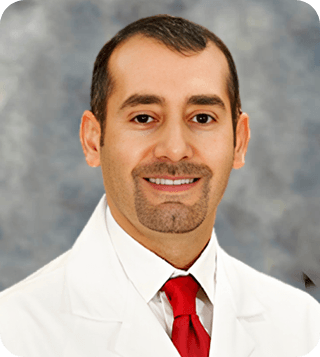
Dr. Eddie El-YussifBoard Certified Orthopedic Surgeon, and Fellow of the American Academy of Orthopedic Surgeon
Dr. Eddie El-Yussif made Metropolitan Detroit his home in August of 2009. Raised in Fairfax County, Virginia, Dr. El-Yussif graduated with honors from The University of Virginia, received his medical degree at The Kansas City University of Medicine and Biosciences, and completed his residency in Orthopaedic Surgery at Garden City Osteopathic Hospital (Garden City, MI), an affiliate of Michigan State University.
Why Choose Dr. Eddie El-Yussif for Non-Surgical Knee Treatments?
When it comes to treating knee pain, choosing the right specialist can make a significant difference in your recovery and overall quality of life. Dr. Eddie El-Yussif is a fellowship-trained orthopedic surgeon with extensive experience in evaluating and treating a wide range of knee conditions. His patient-centered approach focuses on identifying the root cause of pain and recommending the least invasive treatment options whenever possible.
Rather than relying on a one-size-fits-all treatment plan, Dr. El-Yussif carefully evaluates each patient's symptoms, activity level, medical history, and imaging findings to create a customized treatment strategy. His goal is to help patients achieve meaningful pain relief, improved function, and enhanced mobility while avoiding unnecessary surgery whenever appropriate.
At Elyussif Orthopedic & Knee Pain Center, patients benefit from access to advanced non-surgical therapies that may help reduce inflammation, promote healing, and support joint health. Through comprehensive evaluations and individualized care, Dr. El-Yussif works closely with patients to develop solutions that align with their long-term health and lifestyle goals.
Comprehensive Non-Surgical Knee Treatment Options
Many knee conditions can be successfully managed without surgery, especially when treatment begins early. Depending on the underlying cause of your symptoms, treatment options may include:
Regenerative Medicine Therapies
Regenerative medicine treatments are designed to support the body's natural healing processes. These therapies may be beneficial for certain patients with early arthritis, tendon injuries, cartilage damage, and other musculoskeletal conditions. Dr. El-Yussif evaluates each patient carefully to determine whether regenerative treatment options may be appropriate.
Hyaluronic Acid Injections
Hyaluronic acid injections are commonly used to help relieve knee pain caused by osteoarthritis. These injections supplement the natural lubrication within the joint, helping improve movement and reduce discomfort during daily activities.
Physical Therapy and Rehabilitation
Physical therapy plays an important role in strengthening the muscles surrounding the knee, improving flexibility, and restoring functional movement. A personalized rehabilitation program can help improve stability and reduce stress on the joint.
Knee Bracing
Specialized knee braces can provide support, improve alignment, and reduce pressure on damaged areas of the joint. Bracing may help improve comfort and mobility during daily activities.
MLS Laser Therapy
MLS Laser Therapy is a non-invasive treatment option designed to help reduce inflammation and support tissue healing. Many patients appreciate this therapy because it is painless, drug-free, and does not require downtime.
Lifestyle Modification and Joint Preservation
Weight management, exercise recommendations, activity modification, and joint-preservation strategies often play a critical role in long-term knee health. Dr. El-Yussif helps patients understand how these factors can influence symptoms and overall joint function.
Conditions Commonly Treated Without Surgery
Non-surgical knee treatments may help patients experiencing:
- Knee osteoarthritis
- Chronic knee pain
- Cartilage injuries
- Tendonitis
- Ligament sprains
- Knee inflammation
- Joint stiffness
- Swelling and discomfort
- Early degenerative joint disease
- Sports-related knee injuries
- Overuse injuries
By addressing symptoms early, patients may be able to maintain an active lifestyle and potentially delay the progression of joint damage.
Personalized Knee Care Focused on Long-Term Results
Every patient experiences knee pain differently, which is why individualized treatment plans are essential. At Elyussif Orthopedic & Knee Pain Center, treatment recommendations are based on a thorough understanding of your condition, goals, and lifestyle. Whether you are looking to remain active, return to sports, continue working comfortably, or simply perform everyday activities without pain, Dr. El-Yussif develops a treatment plan designed around your unique needs.
The focus is not only on relieving symptoms but also on improving overall knee function and helping patients maintain their independence and quality of life for years to come.
Frequently Asked Questions About Non-Surgical Knee Treatments
What knee conditions can be treated without surgery?
Many knee conditions can initially be managed with conservative treatment, including osteoarthritis, tendonitis, bursitis, cartilage injuries, mild meniscus tears, ligament sprains, and chronic knee pain caused by overuse or inflammation.
How do I know if I am a candidate for non-surgical knee treatment?
A comprehensive evaluation including your symptoms, medical history, physical examination, and imaging studies can help determine whether non-surgical treatment options are appropriate for your condition.
What non-surgical treatments are available for knee arthritis?
Treatment options may include hyaluronic acid injections, regenerative medicine therapies, physical therapy, bracing, laser therapy, weight management strategies, and activity modification.
Can non-surgical treatments help me avoid knee replacement surgery?
Many patients experience significant pain relief and improved function through conservative treatment. While results vary, these treatments may help delay the need for knee replacement surgery in some cases.
How long does it take to see results from treatment?
Response times vary depending on the specific treatment and condition being treated. Some therapies may provide relief within days or weeks, while others may continue improving symptoms over a longer period.
Are regenerative medicine treatments safe?
Regenerative medicine therapies are generally considered safe when performed by qualified providers. During your consultation, Dr. El-Yussif will discuss potential benefits, risks, and whether these treatments are appropriate for your condition.
Will I need physical therapy?
Many patients benefit from physical therapy because it helps improve strength, flexibility, balance, and overall knee function while supporting long-term symptom management.
When should I consider surgery instead of conservative treatment?
Surgery may be considered when non-surgical treatments no longer provide adequate relief, joint damage becomes advanced, or symptoms significantly impact your daily activities and quality of life.
Schedule a Consultation for Non-Surgical Knee Treatments in Clinton Township, MI
You do not have to let knee pain control your life. Dr. Eddie El-Yussif and the team at Elyussif Orthopedic & Knee Pain Center provide advanced non-surgical knee treatment options for patients throughout Clinton Township, Lenox, Macomb County, and neighboring Michigan communities.
Whether you are experiencing arthritis-related pain, chronic knee discomfort, stiffness, swelling, or limitations in mobility, our team can help you explore treatment options designed to relieve pain and improve function.
Contact Elyussif Orthopedic & Knee Pain Center today to schedule your consultation and learn how personalized non-surgical knee treatments in Clinton Township, MI, can help you get back to the activities you love.