Platelet Rich Plasma (PRP) Injections for the Knee in Clinton Township, MI
Chronic knee pain can limit your ability to work, exercise, enjoy hobbies, and participate in everyday activities. If you're looking for a non-surgical treatment option that utilizes your body's natural healing processes, Platelet Rich Plasma (PRP) therapy may be worth considering. At Elyussif Orthopedic & Knee Pain Center in Clinton Township, MI, Dr. Eddie El-Yussif offers advanced PRP injections for patients experiencing knee pain related to osteoarthritis, tendon injuries, cartilage damage, and other knee conditions.
PRP therapy involves concentrating platelets from a patient's own blood and injecting them into the affected area of the knee. Platelets contain growth factors that play a role in the body's healing response. PRP injections are often used as part of a comprehensive treatment plan aimed at reducing pain, supporting tissue repair, and improving knee function.
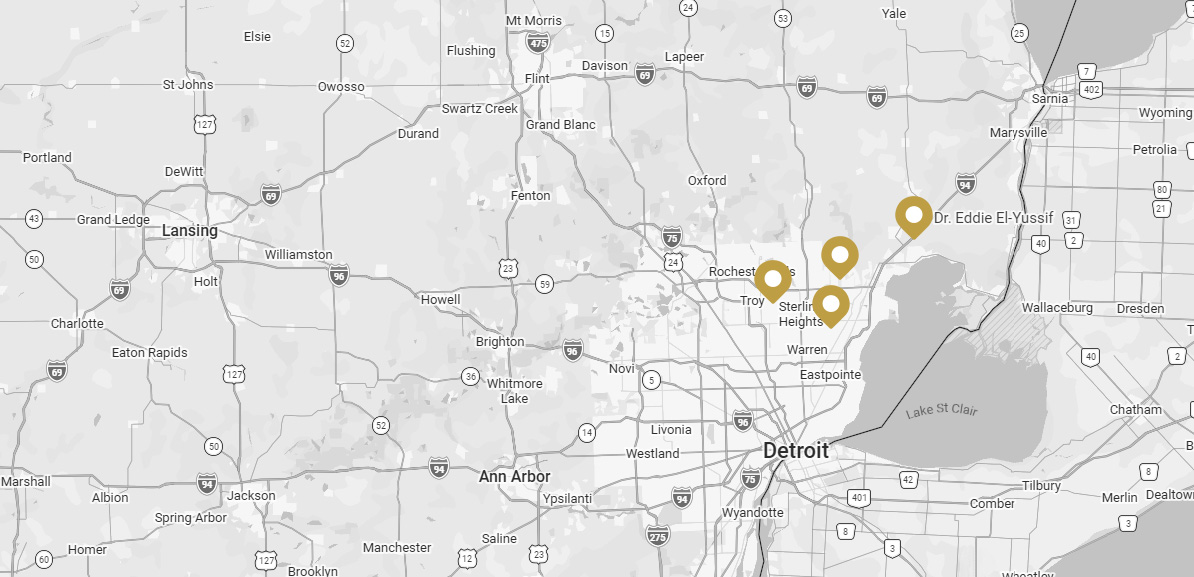
Patients throughout Clinton Township, Lenox, Macomb County, and surrounding Michigan communities turn to Elyussif Orthopedic & Knee Pain Center for personalized knee care and innovative treatment options designed to help them stay active and maintain their quality of life.
What are Platelet-Rich Plasma (PRP) Injections for the Knee?
Platelet-rich plasma (PRP) injections for the knee are a minimally invasive treatment designed to reduce pain, improve joint function, and potentially promote healing in knee injuries or degenerative conditions. This therapy uses the patient’s own blood, which is processed to concentrate platelets, growth factors, and other proteins that aid in tissue repair and regeneration.
Indications for Platelet-Rich Plasma (PRP) Injections for the Knee
Platelet-rich plasma injections for the knee may be indicated to treat various knee conditions, such as:
- Osteoarthritis: Helps reduce inflammation, slow cartilage degeneration, and alleviate pain in mild to moderate knee osteoarthritis.
- Meniscus Tears: Aids in tissue healing in small, stable tears in the avascular zone of the meniscus where healing potential is limited.
- Tendonitis or Ligament Injuries: Promotes repair of damaged tendons or ligaments in conditions like patellar tendinitis (Jumper’s Knee) and partial tears of the anterior cruciate ligament (ACL) or medial collateral ligament (MCL).
- Post-Surgical Healing: Enhances recovery after surgeries like ACL reconstruction or meniscus repair.
Procedure for Platelet-Rich Plasma (PRP) Injections of the Knee
The procedure for platelet-rich plasma injections of the knee is typically performed as an outpatient treatment and involves the following steps:
- A small amount (15-50 mL) of the patient’s blood is drawn from a vein, usually in the arm.
- The blood is placed in a centrifuge to separate its components (red blood cells, plasma, and platelets).
- The platelet-rich plasma layer is isolated and prepared for injection.
- The skin around the knee is cleaned and sterilized to minimize the risk of infection.
- Numbing medication may be applied or injected to reduce discomfort.
- Ultrasound guidance is often used to ensure accurate placement of the PRP into the target area (e.g., joint space, tendon, or ligament).
- The PRP is injected into the knee using a sterile syringe and needle.
Post-Procedure Care and Recovery
After a platelet-rich plasma injection for the knee, the patient is observed briefly for any immediate adverse reactions. The patients are typically advised to rest and avoid strenuous activities for 24-48 hours to allow the treatment to take effect. Mild swelling, discomfort, or stiffness in the knee may occur and can be managed with over-the-counter pain relievers. Applying ice to the area can also help reduce swelling. Patients are encouraged to gradually resume normal activities, with physical therapy often recommended to optimize recovery and joint function. Follow-up appointments may be scheduled to monitor progress, and additional PRP injections might be advised depending on the condition being treated.
Risks and Complications
The risks and complications of platelet-rich plasma injections for the knee are generally low since the treatment uses the patient’s own blood, reducing the risk of allergic reactions or rejection. However, some individuals may experience temporary discomfort, swelling, or mild pain at the injection site. There is also a small risk of infection, bleeding, or tissue damage, particularly if the procedure is not performed under sterile conditions.
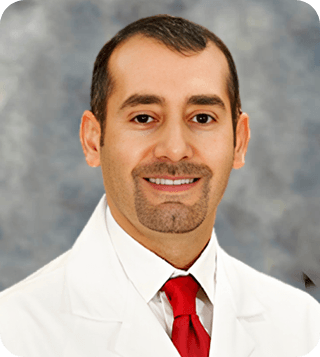
Dr. Eddie El-YussifBoard Certified Orthopedic Surgeon, and Fellow of the American Academy of Orthopedic Surgeon
Dr. Eddie El-Yussif made Metropolitan Detroit his home in August of 2009. Raised in Fairfax County, Virginia, Dr. El-Yussif graduated with honors from The University of Virginia, received his medical degree at The Kansas City University of Medicine and Biosciences, and completed his residency in Orthopaedic Surgery at Garden City Osteopathic Hospital (Garden City, MI), an affiliate of Michigan State University.
Why Choose Dr. Eddie El-Yussif for Platelet Rich Plasma (PRP) Injections for the Knee?
Choosing the right provider for regenerative medicine treatments is essential. Dr. Eddie El-Yussif is a fellowship-trained orthopedic surgeon with extensive experience diagnosing and treating a wide range of knee conditions. His comprehensive understanding of knee anatomy, biomechanics, and joint preservation strategies allows him to determine whether PRP therapy may be an appropriate treatment option for each individual patient.
Dr. El-Yussif takes a personalized approach to care, carefully evaluating symptoms, imaging findings, activity levels, and treatment goals before recommending a treatment plan. Rather than simply focusing on symptom relief, he aims to address underlying causes of knee pain and help patients maintain mobility and function for as long as possible.
At Elyussif Orthopedic & Knee Pain Center, patients receive individualized attention and access to advanced regenerative medicine options in a setting focused exclusively on knee health. Every treatment recommendation is designed to support long-term joint function and improve quality of life.
What Is Platelet Rich Plasma (PRP) Therapy?
Platelet Rich Plasma therapy is a regenerative medicine treatment that uses a concentrated portion of a patient's own blood. After a blood sample is collected, it is processed to separate and concentrate platelets. The resulting PRP solution is then injected into the targeted area of the knee.
Platelets contain proteins and growth factors involved in tissue repair and healing. By delivering a higher concentration of these components directly to the affected area, PRP therapy may help support the body's natural healing response.
Conditions That May Benefit From PRP Knee Injections
PRP therapy may be considered for patients experiencing:
- Mild to moderate knee osteoarthritis
- Chronic knee pain
- Cartilage injuries
- Patellar tendon injuries
- Quadriceps tendon injuries
- Ligament sprains
- Sports-related knee injuries
- Overuse injuries
- Degenerative joint conditions
- Persistent inflammation affecting knee function
A thorough evaluation is necessary to determine whether PRP therapy is appropriate based on the severity of the condition and individual treatment goals.
Potential Benefits of PRP Therapy
Patients often explore PRP injections because they offer a non-surgical treatment option that utilizes the body's own biological healing mechanisms.
Potential benefits may include:
- Reduced knee pain
- Improved joint function
- Enhanced mobility
- Support for tissue healing
- Reduced inflammation
- Delayed need for more invasive procedures
- Minimal downtime compared to surgery
Results vary among individuals, and Dr. El-Yussif discusses realistic expectations during the consultation process.
A Personalized Approach to Knee Regeneration
Successful treatment begins with an accurate diagnosis. At Elyussif Orthopedic & Knee Pain Center, PRP therapy is not viewed as a one-size-fits-all solution. Instead, it is incorporated into a customized treatment plan that may also include physical therapy, activity modification, bracing, weight management strategies, or other conservative treatments when appropriate.
This comprehensive approach allows patients to receive care that addresses both symptoms and the factors contributing to knee dysfunction.
Supporting Long-Term Knee Health
Maintaining healthy knee function often requires more than a single treatment. Dr. El-Yussif works closely with patients to develop strategies that support long-term mobility, reduce joint stress, and promote overall knee health.
Whether your goal is returning to recreational activities, remaining active at work, or simply walking comfortably without pain, a personalized treatment plan can help support your recovery journey.
Frequently Asked Questions About PRP Injections for the Knee
What is Platelet Rich Plasma (PRP)?
PRP is a regenerative medicine treatment created by concentrating platelets from a patient's own blood. The concentrated platelets are then injected into the affected area to support the body's natural healing processes.
How does PRP therapy work?
Platelets contain growth factors and proteins involved in tissue repair. PRP injections deliver a concentrated amount of these components directly to the injured or degenerative area of the knee.
What knee conditions can PRP injections treat?
PRP therapy may be used for knee osteoarthritis, tendon injuries, ligament sprains, cartilage damage, chronic knee pain, and certain sports-related injuries.
Am I a candidate for PRP injections?
Eligibility depends on several factors, including your diagnosis, symptom severity, imaging findings, overall health, and treatment goals. A consultation with Dr. El-Yussif can help determine whether PRP therapy may be appropriate for you.
Is PRP therapy painful?
Most patients tolerate PRP injections well. Some temporary soreness or discomfort may occur following the procedure, but this typically resolves within a few days.
How long does it take to see results from PRP treatment?
Response times vary among patients. Some individuals notice improvement within several weeks, while others may continue experiencing gradual improvement over several months.
How many PRP injections will I need?
The number of treatments depends on your condition, severity of symptoms, and treatment goals. Dr. El-Yussif will discuss individualized recommendations during your evaluation.
Can PRP help me avoid knee replacement surgery?
For some patients with mild to moderate knee degeneration, PRP therapy may help improve symptoms and delay the need for surgical intervention. However, results vary depending on the extent of joint damage.
Schedule a PRP Consultation in Clinton Township, MI
If knee pain is interfering with your daily activities, you may benefit from learning more about Platelet Rich Plasma (PRP) therapy. Dr. Eddie El-Yussif and the team at Elyussif Orthopedic & Knee Pain Center provide personalized regenerative medicine solutions for patients throughout Clinton Township, Lenox, Macomb County, and neighboring Michigan communities.
Our goal is to help patients explore effective, non-surgical treatment options that support mobility, reduce discomfort, and promote long-term knee health. Whether you're dealing with arthritis, chronic knee pain, or a sports-related injury, we can help determine whether PRP therapy may be right for you.
Contact Elyussif Orthopedic & Knee Pain Center today to schedule your consultation and discover how PRP injections for the knee in Clinton Township, MI, may help you return to a more active and comfortable lifestyle.