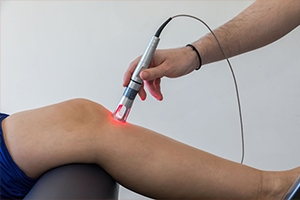
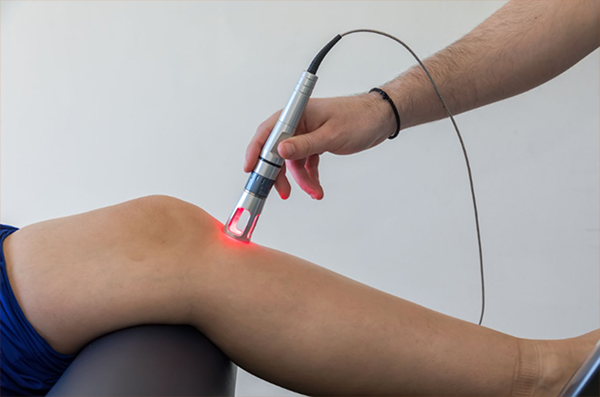
When knee pain makes walking, exercising, or climbing stairs increasingly difficult, many patients begin looking for options beyond medication or injections. Laser therapy is one nonsurgical approach that may help manage certain types of knee discomfort. Remy™ Laser therapy uses focused light energy to create therapeutic heating of targeted tissues, with the goal of providing temporary relief from minor joint pain and stiffness. Here is what patients should know about this treatment and its potential benefits.
What Is Remy Knee Laser Therapy?
Remy™ is a Class IV laser system that delivers therapeutic light energy to targeted areas. According to the manufacturer, its devices are intended for topical heating that can provide temporary relief of minor muscle and joint pain and stiffness, minor arthritis pain, or muscle spasms. The treatment may also temporarily increase local blood circulation and promote muscle relaxation.
For knee patients, laser therapy can be incorporated into a broader nonsurgical treatment plan for conditions such as knee osteoarthritis, certain tendon problems, and other sources of musculoskeletal discomfort. The appropriate use depends on the diagnosis and individual circumstances.
How Can Laser Therapy Help Knee Pain?
Knee arthritis develops when the protective cartilage covering the joint surfaces becomes damaged or worn. Osteoarthritis can lead to pain, stiffness, swelling, reduced mobility, and difficulty performing everyday activities.
Laser therapy does not replace damaged cartilage or reverse advanced arthritis. Instead, its role is primarily symptom management. Therapeutic heating may help temporarily reduce minor joint pain and stiffness and improve comfort with movement.
That distinction matters. Patients should view laser therapy as one potential component of conservative knee care rather than a cure for structural arthritis.
A Noninvasive Option for Knee Arthritis
One of the most appealing aspects of laser therapy is that it is noninvasive. Unlike injections, arthroscopy, or joint replacement, there is no needle or incision involved in the treatment itself.
The laser device is positioned over the treatment area, allowing energy to be delivered through the skin. The knee laser treatment information describes sessions as typically lasting approximately 10 to 30 minutes, with patients generally able to return to normal activities afterward.
For patients looking for conservative options before considering more invasive treatment, this can make laser therapy an attractive addition to a comprehensive care plan.
May Help Reduce Knee Pain and Stiffness
Pain and stiffness can reinforce each other. When a knee hurts, you may move less. Reduced activity can contribute to weakness and decreased mobility, which can make everyday movement more difficult.
Laser therapy may temporarily reduce minor joint pain and stiffness, potentially making movement more comfortable. The manufacturer specifically identifies temporary relief of minor arthritis pain and joint stiffness among the intended uses of the technology.
For someone with knee arthritis, the practical goal is not simply to make the knee feel better for a short period. Improving comfort may help support other parts of a treatment plan, such as therapeutic exercise, strengthening, weight management, and activity modification.
Laser Therapy Can Complement Physical Therapy and Exercise
Exercise remains an important part of managing many knee conditions. Strengthening the muscles around the knee can improve support and function, while maintaining appropriate activity can help preserve mobility.
However, pain can make exercise difficult.
When laser therapy is used as part of a broader treatment program, temporary symptom relief may make prescribed movement and rehabilitation easier to tolerate. This does not mean laser therapy replaces physical therapy. Instead, the treatments can address different aspects of the patient's problem.
A personalized program may combine exercise, weight management, medications, bracing, injections, laser therapy, or other nonsurgical approaches depending on the underlying condition. The treatment options available for knee arthritis can vary considerably from patient to patient.
What Does a Remy Laser Treatment Feel Like?
Patients may experience warmth or mild tingling during treatment. The knee treatment information describes these sensations as generally temporary.
Because the treatment is delivered externally, there is no injection site or surgical wound to care for afterward.
The treatment should still be administered by an appropriately trained healthcare professional. The manufacturer notes that Remy Class IV lasers are restricted to sale by or on the order of a licensed physician and require proper clinical and technical training.
How Many Laser Treatments Are Needed?
There is no single treatment schedule that works for every patient.
The knee treatment information indicates that multiple treatments may be recommended and that improvements in pain and mobility can develop gradually over several weeks.
Your treatment plan should depend on the cause and severity of your symptoms, your response to therapy, and the other treatments being used.
A patient with mild arthritis and occasional stiffness may have very different needs from someone with advanced osteoarthritis and substantial cartilage loss.
Is Remy Laser Therapy Right for Severe Knee Arthritis?
Laser therapy may provide temporary symptom relief, but it does not eliminate advanced cartilage loss or correct significant structural changes within the knee.
Patients with severe osteoarthritis may eventually require more comprehensive treatment. Depending on the severity of arthritis, nonsurgical options can include physical therapy, medications, weight management, braces, injections, and local stimulation therapies. When severe pain continues to limit daily activities despite appropriate conservative care, partial or total knee replacement may become an option.
This is why an accurate diagnosis matters before choosing any treatment.
What Are the Potential Benefits of Remy Knee Laser Therapy?
For appropriately selected patients, potential benefits include:
- Noninvasive treatment: No injection or incision is required.
- Temporary pain relief: The technology is intended to provide temporary relief from minor joint and arthritis pain.
- Reduced stiffness: Therapeutic heating may temporarily improve joint comfort and flexibility.
- Local treatment: Energy is directed toward the affected area.
- Minimal disruption: Treatment sessions typically take a relatively short amount of time and do not generally require downtime.
- Potential complement to rehabilitation: Improved comfort may make prescribed movement and exercise easier for some patients.
Results can vary, and laser therapy should be considered within the context of an individual's diagnosis and overall treatment plan.
Frequently Asked Questions About Remy Knee Laser Therapy
What is Remy Laser therapy for knee pain?
Remy™ Laser therapy uses therapeutic light energy and topical heating to provide temporary relief of minor joint pain and stiffness, including minor arthritis pain. It may be incorporated into a broader nonsurgical treatment plan for appropriate knee conditions.
Does Remy Laser therapy treat knee arthritis?
Laser therapy may temporarily reduce symptoms such as minor arthritis pain and stiffness, but it does not restore lost cartilage or cure advanced osteoarthritis. It is best considered a symptom-management option rather than a treatment that reverses structural joint damage.
Is knee laser therapy painful?
Laser treatment is generally described as producing warmth or mild tingling rather than significant discomfort. These sensations typically subside after treatment. Individual experiences can vary.
How long does a Remy knee laser treatment take?
A typical knee laser treatment session may last approximately 10 to 30 minutes, according to treatment information provided by the knee practice. Patients generally do not require downtime afterward.
Can laser therapy replace knee replacement?
Laser therapy is not a replacement for knee replacement when advanced arthritis has caused substantial structural damage and persistent functional limitations. It may be considered as part of conservative care, while patients with severe arthritis may eventually need to discuss surgical options with an orthopedic specialist.
If persistent knee pain is interfering with the activities you enjoy, laser therapy may be one nonsurgical option worth discussing as part of a broader treatment plan. A proper evaluation can help determine whether your symptoms are appropriate for this approach or whether another treatment would better address the underlying cause.
AUTHOR: Eddie El-Yussif, DO, FAAOS – Board-Certified Orthopedic Surgeon
Eddie El-Yussif, DO, FAAOS is a board-certified orthopedic surgeon specializing in knee arthroplasty, including minimally invasive total knee replacement, partial knee replacement, and complex revision knee surgery. He has proudly served the Metropolitan Detroit community since 2009 and is committed to delivering patient-centered orthopedic care focused on restoring mobility and improving quality of life.
Credentials & Recognition
Dr. El-Yussif graduated with honors from the University of Virginia and earned his medical degree from Kansas City University of Medicine and Biosciences. He completed his Orthopaedic Surgery residency at Garden City Osteopathic Hospital in Garden City, Michigan, an affiliate of Michigan State University, where he served as Chief Resident and was actively involved in resident education. He received top national recognition for his research paper, Distal Femur Fractures in Osteopenic Patients: Plates vs. Nails.
Following residency, Dr. El-Yussif completed a prestigious knee arthroplasty fellowship at the Anderson Orthopaedic Research Institute in Alexandria, Virginia, where he trained alongside pioneers in joint replacement surgery. He holds the FAAOS distinction as a Fellow of the American Academy of Orthopaedic Surgeons, recognizing his expertise, commitment to patient care, and dedication to ongoing professional development. He also serves as a Clinical Instructor at Michigan State University School of Medicine.
Clinical Expertise
Dr. El-Yussif specializes in knee replacement, including advanced knee replacement techniques, minimally invasive total knee replacement, and partial knee arthroplasty. His approach emphasizes surgical precision, evidence-based treatment strategies, and comprehensive postoperative care to help patients return to active lifestyles as safely and efficiently as possible.
Medical Disclaimer: This information is for educational purposes only and does not constitute medical advice. For diagnosis and treatment recommendations, please consult with Dr. El-Yussif or another qualified orthopedic specialist.
Content authored by Dr. Eddie El-Yussif and verified against official sources.