Knee Arthroscopy in Clinton Township, MI
Persistent knee pain, swelling, locking, catching, or instability can make it difficult to stay active and enjoy everyday life. When conservative treatments are no longer providing adequate relief, knee arthroscopy may be an effective minimally invasive solution for diagnosing and treating various knee conditions. At Elyussif Orthopedic & Knee Pain Center in Clinton Township, MI, Dr. Eddie El-Yussif specializes in advanced knee arthroscopy procedures designed to relieve pain, restore function, and help patients return to their normal activities.
Knee arthroscopy is a minimally invasive surgical procedure that allows orthopedic surgeons to evaluate and treat problems within the knee joint using specialized instruments and a small camera. Compared to traditional open surgery, arthroscopy typically involves smaller incisions, less tissue disruption, and a faster recovery for many patients. Dr. El-Yussif utilizes modern arthroscopic techniques to address a variety of knee injuries and conditions while prioritizing patient comfort and long-term joint health.
Patients throughout Clinton Township, Lenox, Macomb County, and surrounding Michigan communities trust Elyussif Orthopedic & Knee Pain Center for comprehensive knee care and personalized treatment solutions.
What is Knee Arthroscopy?
Knee arthroscopy is a common surgical procedure performed using an arthroscope, a viewing instrument, to diagnose or treat a knee problem. It is a relatively safe procedure and you will usually be discharged from the hospital on the same day of surgery.
What is the Anatomy of the Knee?
The knee joint is one of the most complex joints of the body. The lower end of the thighbone (femur) meets the upper end of the shinbone (tibia) at the knee joint. A small bone called the patella (kneecap) rests on a groove on the front of the femoral end. Another bone of the lower leg (fibula) forms a joint with the shinbone.
To allow smooth and painless motion of the knee joint, articular surfaces of these bones are covered with a shiny white slippery articular cartilage. Two C-shaped cartilaginous menisci are present in between the femoral end and the tibial end.
Menisci act as shock absorbers, providing cushion to the joints. They also play an important role in providing stability and load-bearing to the knee joint.
Bands of tissue, including the cruciate and collateral ligaments, keep the different bones of the knee joint together and provide stabilization to the joint. Surrounding muscles are connected to the knee bones by tendons. The bones work together with the muscles and tendons to provide mobility to the knee joint. The whole knee joint is covered by a ligamentous capsule, which further stabilizes the joint. This ligamentous capsule is also lined with a synovial membrane that secretes synovial fluid for lubrication.
What are the Indications for Knee Arthroscopy?
The knee joint is vulnerable to a variety of injuries. The most common knee problems where knee arthroscopy may be recommended for diagnosis and treatment are:
- Torn meniscus
- Torn or damaged cruciate ligament
- Torn pieces of articular cartilage
- Inflamed synovial tissue
- Misalignment of the patella
- Baker’s cyst: a fluid-filled cyst that develops at the back of the knee due to the accumulation of synovial fluid. It commonly occurs with knee conditions such as meniscal tear, knee arthritis, and rheumatoid arthritis.
- Certain fractures of the knee bones
What is the Procedure for Knee Arthroscopy?
Knee arthroscopy is performed under local, spinal or general anesthesia.
- Your surgeon makes two or three small incisions around the knee.
- Next, a sterile saline solution is injected into the knee to push apart the various internal structures, and provide a clear view and more room for your surgeon to work.
- An arthroscope, a narrow tube with a tiny video camera on the end, is inserted through one of the incisions to view the knee joint. The structures inside the knee are visible to your surgeon on a video monitor in the operating room.
- Your surgeon first examines the structures inside the knee joint to assess the cause of the problem.
- Once a diagnosis is made, surgical instruments such as scissors, motorized shavers, or lasers are inserted through another small incision, and the repair is performed based on the diagnosis.
The repair procedure may include any of the following:
- Removal or repair of a torn meniscus
- Reconstruction or repair of a torn cruciate ligament
- Removal of small torn pieces of articular cartilage
- Removal of loose fragments of bones
- Removal of inflamed synovial tissue
- Removal of Baker’s cyst
- Realignment of the patella
- Making small holes or microfractures near damaged cartilage to stimulate cartilage growth
After the repair, the knee joint is carefully examined for bleeding or any other damage. The saline is then drained from the knee joint. Finally, the incisions are closed with sutures or steri-strips, and the knee is covered with a sterile dressing.
What Does Postoperative Care for Knee Arthroscopy Involve?
You are most often discharged on the same day of your knee arthroscopy. Pain medicines are prescribed to manage pain. Crutches or a knee brace may be recommended for several weeks. A rehabilitation program may also be advised for a successful recovery. Therapeutic exercises aim to restore motion and strengthen the muscles of the leg and knee.
What Does Recovery after Knee Arthroscopy Involve?
Recovery after the surgery depends on the type of procedure performed. Recovery from simple procedures is often fast. Recovery from knee arthroscopy is much faster than that from an open knee surgery.
What are the Risks and Complications of Knee Arthroscopy?
Knee arthroscopy is a safe procedure; complications are very rare. Complications specific to knee arthroscopy include bleeding in the knee joint, infection, knee stiffness, blood clots or continuing knee problems.
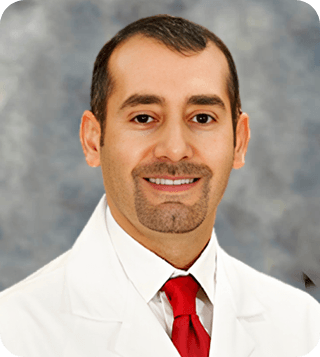
Dr. Eddie El-YussifBoard Certified Orthopedic Surgeon, and Fellow of the American Academy of Orthopedic Surgeon
Dr. Eddie El-Yussif made Metropolitan Detroit his home in August of 2009. Raised in Fairfax County, Virginia, Dr. El-Yussif graduated with honors from The University of Virginia, received his medical degree at The Kansas City University of Medicine and Biosciences, and completed his residency in Orthopaedic Surgery at Garden City Osteopathic Hospital (Garden City, MI), an affiliate of Michigan State University.
Why Choose Dr. Eddie El-Yussif for Knee Arthroscopy?
Choosing an experienced orthopedic surgeon is essential when considering knee arthroscopy. Dr. Eddie El-Yussif is a fellowship-trained orthopedic surgeon with extensive expertise in diagnosing and treating a wide range of knee conditions. His specialized focus on knee health allows him to provide highly individualized treatment plans tailored to each patient's unique needs and goals.
Dr. El-Yussif carefully evaluates each patient's symptoms, imaging studies, activity level, and overall health before recommending surgery. His goal is to pursue the most effective treatment option while preserving as much healthy tissue and joint function as possible.
At Elyussif Orthopedic & Knee Pain Center, patients benefit from advanced surgical techniques, state-of-the-art technology, and compassionate care throughout every stage of treatment. From initial consultation through recovery and rehabilitation, Dr. El-Yussif is committed to helping patients achieve optimal outcomes and return to the activities they enjoy.
What Is Knee Arthroscopy?
Knee arthroscopy is a minimally invasive surgical procedure that uses a small camera called an arthroscope to view the inside of the knee joint. The camera transmits images to a monitor, allowing the surgeon to diagnose and treat various knee conditions through small incisions.
Specialized surgical instruments can be inserted through additional small incisions to repair or remove damaged tissue, address structural problems, and improve joint function.
Conditions Commonly Treated with Knee Arthroscopy
Knee arthroscopy may be recommended for a variety of conditions, including:
- Meniscus tears
- Cartilage injuries
- Loose bodies within the joint
- Synovitis
- Certain ligament injuries
- Patellar tracking disorders
- Knee locking or catching
- Chronic knee swelling
- Sports-related knee injuries
- Persistent knee pain that has not responded to conservative treatment
A thorough orthopedic evaluation helps determine whether arthroscopic surgery is appropriate for your condition.
Benefits of Knee Arthroscopy
Many patients choose arthroscopy because it offers a minimally invasive approach to treating knee problems.
Potential benefits may include:
- Smaller incisions
- Less tissue disruption
- Reduced postoperative discomfort
- Faster recovery compared to some traditional procedures
- Improved joint function
- Enhanced mobility
- Relief from pain and mechanical symptoms
- Earlier return to daily activities
Individual outcomes vary depending on the condition being treated and the patient's overall health.
Advanced Arthroscopic Techniques
Modern arthroscopic technology allows surgeons to visualize the knee joint in remarkable detail. This enhanced visualization helps Dr. El-Yussif accurately diagnose problems and perform precise treatments while minimizing disruption to surrounding tissues.
Whether addressing a meniscus tear, removing damaged tissue, or treating cartilage injuries, arthroscopic techniques can provide effective treatment while supporting a smoother recovery process.
Recovery After Knee Arthroscopy
Recovery following knee arthroscopy depends on the specific procedure performed and the patient's overall condition. Many patients are able to return home the same day as surgery.
Physical therapy and rehabilitation exercises often play an important role in restoring strength, flexibility, and function after the procedure. Dr. El-Yussif develops personalized recovery plans designed to help patients safely return to their normal activities.
Helping Patients Return to Active Lifestyles
Knee injuries and chronic joint problems can interfere with work, sports, exercise, and everyday life. The goal of knee arthroscopy is to relieve symptoms, improve function, and help patients regain confidence in their movement.
Whether you're an athlete recovering from a sports injury or an individual seeking relief from persistent knee pain, Dr. El-Yussif provides individualized care focused on achieving the best possible outcome.
Frequently Asked Questions About Knee Arthroscopy
What is knee arthroscopy?
Knee arthroscopy is a minimally invasive surgical procedure that uses a small camera and specialized instruments to diagnose and treat conditions inside the knee joint.
Who is a candidate for knee arthroscopy?
Patients with meniscus tears, cartilage injuries, chronic knee pain, mechanical symptoms, sports injuries, or other knee conditions that have not improved with conservative treatment may be candidates.
Is knee arthroscopy considered major surgery?
Although it is a surgical procedure, knee arthroscopy is generally less invasive than traditional open surgery and is often performed on an outpatient basis.
How long does knee arthroscopy take?
Procedure times vary depending on the condition being treated and the complexity of the surgery. Dr. El-Yussif will discuss expected surgical details during your consultation.
How long is recovery after knee arthroscopy?
Recovery depends on the specific procedure performed. Some patients return to normal activities within a few weeks, while others may require a longer rehabilitation period.
Will I need physical therapy after surgery?
Many patients benefit from physical therapy to restore strength, flexibility, range of motion, and overall knee function following arthroscopy.
Can knee arthroscopy treat arthritis?
Arthroscopy may help address certain symptoms associated with arthritis in selected cases, but it is not typically used to reverse advanced osteoarthritis.
When can I return to sports or exercise?
Return-to-activity timelines vary depending on the condition treated, the procedure performed, and individual recovery progress. Dr. El-Yussif provides personalized guidance throughout the rehabilitation process.
Schedule a Knee Arthroscopy Consultation in Clinton Township, MI
If knee pain, swelling, instability, or mechanical symptoms are affecting your quality of life, knee arthroscopy may help you find lasting relief. Dr. Eddie El-Yussif and the team at Elyussif Orthopedic & Knee Pain Center provide advanced arthroscopic knee surgery for patients throughout Clinton Township, Lenox, Macomb County, and neighboring Michigan communities.
Our goal is to help patients restore mobility, reduce pain, and return to the activities they enjoy through personalized treatment plans and expert orthopedic care. From diagnosis to recovery, we are committed to supporting your journey every step of the way.
Contact Elyussif Orthopedic & Knee Pain Center today to schedule your Knee Arthroscopy consultation in Clinton Township, MI, and learn how minimally invasive knee surgery can help you move more comfortably and confidently.